
Table of Contents
- Why a Loose Neutral Wire in Your Las Vegas Panel Is a Serious Problem
- What a Loose Neutral Wire Actually Does in Your Electrical Panel
- The 10 Warning Signs of a Loose Neutral Wire
- How to Test for a Loose Neutral Wire (and When to Stop)
- Electrical Panel Troubleshooting in Las Vegas: Why Heat Makes It Worse
- What Happens If You Ignore a Loose Neutral Wire
- When to Call a Licensed Electrician in the Las Vegas Valley
- Frequently Asked Questions
Last Updated: October 9, 2026
Why a Loose Neutral Wire in Your Las Vegas Panel Is a Serious Problem
A loose neutral wire in an electrical panel is a connection that has worked itself free enough to interrupt the return path for current, and it can push voltage in your home to dangerous levels.
The neutral carries current back to the utility, and it holds your home’s voltage steady. When that path loosens, power no longer splits evenly between the two hot legs feeding your panel.
Most homeowners never look inside the panel until something stops working. The U.S. Consumer Product Safety Commission tracks home electrical fires each year, and loose connections sit high on the list of causes.
What a Loose Neutral Wire Actually Does in Your Electrical Panel
A loose neutral wire is a compromised connection at the neutral bar, main lug, or terminal block inside your panel. It still passes some current, which is what makes it hard to catch. The connection heats up, resistance climbs, and voltage swings begin.
How the Neutral Balances Voltage Across Your Home
Your panel receives two hot legs and one neutral from the utility. Each hot leg carries 120 volts on its own. Together they make 240 volts for large appliances like dryers and ranges.
The neutral sits at the center of that split, returning current and keeping both legs at roughly the same pressure. A loose lug tips that balance: one leg climbs above 120 volts while the other drops below it.
Loose Lug vs. Broken Service Neutral: What’s the Difference?
A loose lug is a connection inside your panel that has backed off or corroded. It lives on your side of the meter and is repairable. A broken service neutral is a failure on the utility’s side, often overhead or at the mast. It causes the same symptoms but requires the utility to fix it. Electricians test to tell them apart before anyone touches a wire.
|
Problem |
Where It Sits |
Who Repairs It |
Typical Symptom |
|---|---|---|---|
|
Loose lug |
Inside your panel |
Licensed electrician |
Flickering, buzzing, heat at the terminal |
|
Broken service neutral |
Utility side or mast |
Utility company |
Half the home bright, half dim |
|
Shared neutral issue |
Branch circuit |
Licensed electrician |
Odd readings on one circuit |
|
Corroded neutral bar |
Inside your panel |
Licensed electrician |
Voltage drop, warm panel cover |
The 10 Warning Signs of a Loose Neutral Wire
The 10 signs of a loose neutral wire range from flickering lights to a burning smell at the panel. Some show up day to day; others only appear when you open the panel cover and look closely.
Signs 1-5: What You’ll Notice Day to Day
- Flickering or dimming lights. Lights pulse when a large appliance kicks on. This is the most common first clue.
- Lights that brighten in one room while dimming in another. This is the classic current imbalance pattern, and it points straight at the neutral.
- A buzzing sound from outlets, switches, or the panel. Arcing at a loose connection makes noise.
- Appliances that act strange or fail early. Motors and circuit boards are sensitive to voltage spike events.
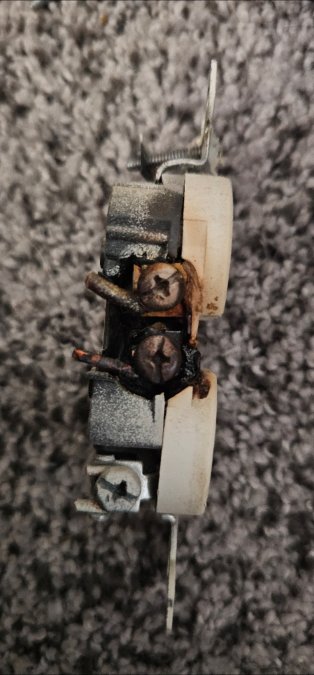
- Warm or discolored outlet covers and switch plates. Heat builds behind the wall before you ever smell it.
Signs 6-10: What You’ll See and Smell at the Panel
- A burning smell near the breaker box. This is a stop-everything sign. Shut off power at the main and call an electrician.
- Scorch marks or melted insulation at the neutral bar. Thermal damage shows as darkened wire or brittle sheathing.
- A loose lug that moves when checked. A neutral conductor should never wiggle under its screw.
- A warm panel cover or dead-front. Heat escaping the enclosure means something inside is running hot.
- Odd voltage readings from a multimeter. Readings that drift away from 120 volts on either leg confirm the problem.
How to Test for a Loose Neutral Wire (and When to Stop)
Testing for a loose neutral wire starts with a visual check of the panel and voltage readings at a few outlets, and it stops the moment you see heat damage or exposed conductors. Anything past that point belongs to a licensed electrician. Here is a safe sequence for initial checks:
- Shut off power at the main breaker before removing any panel cover.
- Look for darkened wire, melted insulation, or scorch marks at the neutral bar.
- Check that each neutral conductor sits tight under its lug with no movement.
What the Voltage Readings Actually Tell You
A healthy panel reads close to 120 volts on each hot leg, and the two legs should stay within a couple of volts of each other. When the neutral connection is loose, that balance breaks down: one leg climbs above 120 volts while the other sags below it, and the gap widens as more load runs on the weaker leg.
Loose Lug vs. Broken Service Neutral: Reading the Pattern
A loose lug inside your panel and a broken service neutral on the utility side produce similar symptoms, but the voltage pattern differs:
- Loose lug: The imbalance shows up gradually and often tracks with load. Readings may look normal with everything off and swing hard when a large appliance kicks on.
- Broken service neutral: The imbalance is severe and constant. Half the home reads high, half reads low, and the pattern does not change much with load.
If the pattern points to the utility side, stop and call the utility. Do not open the meter base or the mast, that is their equipment.
When to Stop and Call an Electrician
Stop testing and call a licensed electrician if you see any of the following:
- Scorch marks, melted insulation, or a burning smell at the panel.
- A neutral lug that moves under its screw or shows corrosion.
- Voltage readings that swing more than a few volts between legs.
If you are not comfortable working inside a live panel, do not open it. A loose neutral wire carries the same current as the hot conductors, and it will not warn you before it bites. Panel work is not a DIY repair.
Electrical Panel Troubleshooting in Las Vegas: Why Heat Makes It Worse
Electrical panel troubleshooting in Las Vegas runs into one local fact that most guides ignore: heat. Summer attic and garage temperatures push panel interiors well above what manufacturers expect, and metal expands and contracts with every swing.
That cycle loosens lugs over time. Aluminum neutral conductors are especially prone to it, which is why torque settings matter more here than in milder climates.
Older Las Vegas Valley homes add another layer. Panels installed decades ago were sized for smaller loads than a modern house runs. Add an EV charger, a pool pump, and a second AC unit, and the neutral works harder than it was built to.
What Happens If You Ignore a Loose Neutral Wire
Ignoring a loose neutral wire leads to appliance damage first and fire risk second. The voltage swings that cause flickering lights also cook the electronics inside your refrigerator, washer, and HVAC control board.
The damage adds up in stages:
- Stage 1: Flickering and dimming. No permanent damage yet.
- Stage 2: Appliances fail early or act erratically. Repair bills start.
- Stage 3: Arcing and thermal damage at the panel. Fire risk becomes real.
Electrical Safety Foundation International publishes home electrical safety guidance that puts loose connections among the leading causes of residential electrical fires. The pattern is consistent: the problem is cheap to fix early and expensive to fix late.
Why Smart Devices Fail First
Modern homes run more voltage-sensitive electronics than ever, and they react to a loose neutral differently than the incandescent bulbs and simple motors of the past.
Smart thermostats, video doorbells, Wi-Fi routers, LED drivers, and smart appliances all run on low-voltage internal power supplies that expect a steady 120 volts.
That is why a loose neutral can look like a smart home problem at first.
A Preventative Maintenance Schedule for Your Panel
Most loose neutral content is reactive, it tells you what to do after something fails. A better approach is to inspect before the connection loosens. Here is a practical schedule for a Las Vegas Valley home:
- Every year: Visual check of the panel exterior for heat, discoloration, or a warm cover. No cover removal needed.
- Every 2-3 years: Professional torque check on panel connections, especially in homes with aluminum neutral conductors or a history of flickering.
- After any major load addition: A new EV charger, pool pump, or second AC unit adds current the neutral has to return. Have the panel inspected after the install.
If your panel has never been inspected and your home is more than 20 years old, schedule a preventative check before a small loose connection turns into a failed appliance or a fire risk.
When to Call a Licensed Electrician in the Las Vegas Valley
Call a licensed electrician the moment you notice a burning smell, scorch marks, or lights that brighten and dim in different rooms at the same time.
At Dead On Electrical Services, we have handled panel repairs and replacements across the Las Vegas Valley since 2018. Our licensed and insured team tests the neutral path, checks torque on every connection, and repairs or replaces what the panel actually needs.
Frequently Asked Questions
How do I know if I have a loose neutral wire in my electrical panel?
The clearest signals are lights that flicker or brighten when large appliances kick on, a buzzing sound at the panel, and outlets or switch plates that feel warm. A loose neutral wire also leaves scorch marks or discoloration around a terminal block or lug. Because these symptoms overlap with other panel problems, the only reliable confirmation comes from an electrician testing voltage and continuity at the main service entrance with a multimeter.
Can a loose neutral wire cause lights to flicker or brighten?
Yes, and the brightening is the tell that separates it from a simple dimming issue. When the neutral connection loosens, voltage stops dividing evenly between the two legs of your service. One leg climbs above 120 volts while the other drops, so bulbs on one circuit surge bright while others dim at the same moment. That voltage fluctuation can damage appliances and electronics, which is why flickering paired with brightening should be checked promptly.
Should I try to tighten the connections in my electrical panel myself?
No. The main service entrance and panel lugs stay energized even after you switch the main breaker off, and neutral conductors can carry current from multiple circuits. Tightening a lug to the wrong torque setting can also create the same loose connection you were trying to fix, or crush the conductor. Torque specifications matter here, and a licensed electrician has the tools and meters to verify the repair is safe before restoring power.
What would cause a neutral wire to burn up?
Loose terminations are the most common cause. A lug that is not tightened to spec creates resistance, resistance creates heat, and heat eventually chars the insulation or the wire itself. Overloaded shared neutrals in older panels, corrosion from outdoor exposure, and aluminum wiring that has not been re-terminated correctly all accelerate the process. A burning smell near the panel means arcing or thermal damage is already underway and needs same-day attention.
A flickering light is easy to ignore until it becomes a burned appliance or a scorched neutral bar. If you are seeing any of the 10 signs of a loose neutral wire in an electrical panel, Dead On Electrical Services can test the connection, correct the torque, and make the repair safely. We offer same-day service and honest, industry-standard work across the Las Vegas Valley. Call (725) 605-6888 to schedule electrical service.