
Table of Contents
- What Goes Into the Cost of an Electrical Panel Upgrade
- 100 Amp vs 200 Amp Panel: Which Do You Actually Need
- Signs of a Failing Electrical Panel You Shouldn’t Ignore
- Permits, Inspections, and Utility Coordination
- Hidden Costs of Code Compliance During a Panel Upgrade
- Financing and Rebate Programs Worth Knowing About
- Electrical Panel Replacement Timeline: What to Expect
- Is an Electrical Panel Upgrade Worth It
Last Updated: August 28, 2026
Planning an electrical panel upgrade but unsure what drives the cost? At Dead On Electrical Services, we handle panel replacements regularly across the Las Vegas Valley, and the pricing question is the first thing every homeowner asks. The honest answer: the cost depends on several variables, and understanding them helps you budget accurately and avoid surprises.
What Goes Into the Cost of an Electrical Panel Upgrade
An electrical panel upgrade reflects the panel itself, labor, permit fees, utility coordination, and whatever code compliance work the inspection requires. Each category varies based on your home’s specific situation. One important distinction is whether the project is simply replacing an existing panel or actually increasing the home’s electrical service capacity. Replacing a panel at the same amperage can be considerably different from upgrading a 100-amp service to 200 amps, which may also involve the meter equipment, service conductors, grounding system, utility requirements, and other components.
Panel Size and Amperage
The required service capacity is one factor that affects the cost, but amperage alone does not determine the price or how many circuit spaces a panel contains. A service upgrade may involve a new panel or meter-main, larger service conductors, grounding and bonding work, utility coordination, and other changes beyond simply replacing the panel.
Many older homes have 100-amp or smaller electrical services, while 200-amp services are common in newer single-family homes. The correct service size should be determined by an electrical load calculation rather than the age or square footage of the home alone. If you’re adding a Level 2 EV charger, a pool, or a large HVAC system, a load calculation may show that 200 amps is the right call even if your current panel seems adequate.
Labor Rates and Project Complexity
Labor is typically the largest single line item in a panel replacement. Labor includes safely removing the existing equipment, transferring and reconnecting branch circuits, installing the new panel or service equipment, completing required grounding and bonding work, coordinating with the utility when necessary, and preparing the installation for inspection.
Complexity factors that increase labor time include old wiring requiring reidentification, aluminum branch circuit wiring, panels in difficult-to-access areas, outdated fuse boxes needing full service entrance rewiring. The more of these factors apply to your home, the higher the labor cost.
Service Entrance Type: Overhead vs. Underground
Overhead service runs from the utility pole to a weatherhead on your roof, then down to the meter base. Underground service comes up through conduit from below grade. Underground service is generally more expensive to work with because modifications involve more excavation and utility coordination.
Las Vegas heat and sun exposure can be hard on exterior electrical equipment over time. During a panel or service upgrade, the condition of the service conductors, weatherhead, raceways, meter equipment, and other exposed components should be evaluated. Damaged insulation, corrosion, overheating, or deteriorated equipment may need to be addressed as part of the project.
100 Amp vs 200 Amp Panel: Which Do You Actually Need
The right panel size depends on your home’s actual electrical load, not just its square footage.
A 100-amp panel works for smaller homes with gas appliances, no EV charger, and modest air conditioning. A 200-amp panel is the right choice for most modern single-family homes, especially those with electric ranges, large HVAC systems, EV chargers, or pools. A proper load calculation, as required by the National Electrical Code published by NFPA, accounts for every continuous and non-continuous load in your home to determine what service size you actually need.
|
Panel Size |
Typical Use Case |
Common Circuits Supported |
|---|---|---|
|
100 Amp |
Small homes, gas appliances, minimal load |
20-30 circuit spaces |
|
200 Amp |
Most modern homes, EV charger, HVAC, pool |
30-40 circuit spaces |
|
400 Amp |
Large homes, multiple HVAC systems, high EV demand |
60+ circuit spaces (often via subpanel) |
Adding a Level 2 EV charger does not automatically mean a home needs a 400-amp service. Many homes with 200-amp service can accommodate EV charging, but the available capacity should be confirmed with a load calculation or another code-compliant load-management method before the charger is installed.
Signs of a Failing Electrical Panel You Shouldn’t Ignore
A failing electrical panel doesn’t always announce itself dramatically. More often, it sends subtle signals that homeowners attribute to other causes.
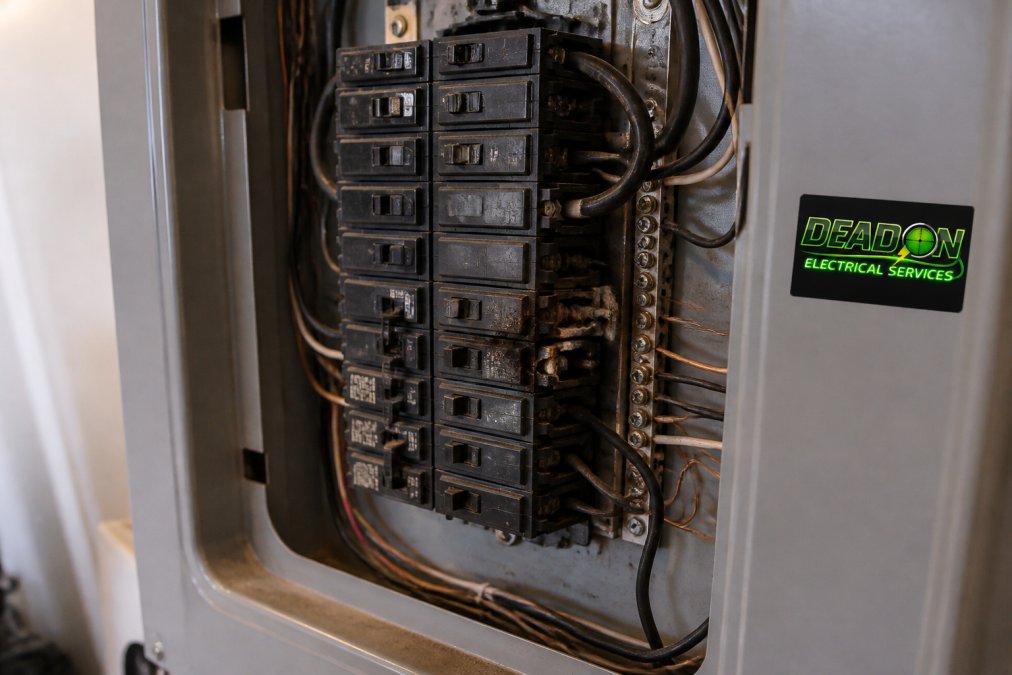
Common signs that warrant a professional evaluation include:
- Frequently tripping breakers that reset but trip again under normal load
- Flickering or dimming lights, especially when large appliances cycle on
- Burning smell from the panel or nearby outlets
- Breakers that feel warm or hot to the touch
- Visible scorch marks or discoloration inside the panel
- Breakers that won’t hold their position after being reset
Certain older panel designs, including Federal Pacific Electric Stab-Lok and Zinsco equipment, are commonly flagged for further evaluation because of concerns associated with their breakers and bus connections. The condition and specific equipment should be evaluated individually rather than assuming every older panel has failed.
Panels in the Las Vegas Valley face additional stress from heat. Sustained high ambient temperatures inside garages and utility rooms accelerate insulation breakdown and increase the risk of connection failures at breaker terminals. If your panel is in an unconditioned space and more than 25 years old, a visual inspection is worth scheduling.
Permits, Inspections, and Utility Coordination
Every electrical panel upgrade requires a permit. This is not optional, and any contractor who suggests skipping the permit process is not someone you want working on your panel.
The permit process typically involves:
- Submitting an application with the local building department
- Scheduling a rough inspection (sometimes waived for panel-only replacements)
- Completing the work with the utility’s service temporarily disconnected
- Passing a final inspection before the utility restores power
Utility coordination is the step most homeowners underestimate. The utility company must disconnect the service entrance before work begins and reconnect it after the inspection passes. Scheduling that disconnect can add one to several business days to the project timeline. In the Las Vegas Valley, NV Energy handles most residential service disconnects and reconnects, and their scheduling window varies by season.
Permit fees vary by jurisdiction. Henderson, North Las Vegas, and unincorporated Clark County each have their own fee schedules.
Hidden Costs of Code Compliance During a Panel Upgrade
A panel or service upgrade may require portions of the existing electrical system affected by the work to be brought into compliance with the currently adopted electrical code. Exactly what must be upgraded depends on the scope of work, existing installation, and requirements of the local authority having jurisdiction.
AFCI and GFCI Requirements
Current electrical codes require AFCI and GFCI protection in many residential locations. However, replacing or upgrading a panel does not necessarily mean every existing circuit in the home must automatically be converted to AFCI or GFCI protection. Requirements depend on the scope of the alteration, the circuit involved, and the locally adopted code and amendments. If additional protection is required as part of the permitted work, those breakers and any necessary troubleshootin
Grounding, Bonding, and Meter Base Upgrades
Older homes often have grounding systems that don’t meet current standards. The NEC requires a properly sized grounding electrode system, and Older grounding and bonding systems may need to be evaluated during a service or panel upgrade. Depending on the existing installation and scope of work, grounding electrodes, grounding electrode conductors, bonding connections, or other components may need to be updated.
The meter base is another common hidden cost. If the existing meter base is damaged, corroded, or incompatible with the new panel configuration, the utility may require it to be replaced before they’ll reconnect service.
Financing and Rebate Programs Worth Knowing About
Utility rebates: NV Energy has offered rebates on certain electrical upgrades tied to energy efficiency improvements. Check directly with Nevada Energy’s residential programs page for current offerings before assuming any rebate applies to your project.
Federal tax credits: The Inflation Reduction Act created tax credits for certain home energy improvements. Panel upgrades that support the installation of qualifying energy-efficient equipment may be eligible.
Financing: Many licensed electrical contractors offer financing options for larger projects. If the cost of a panel upgrade is a barrier, ask about payment plans or third-party financing before deciding to defer necessary work.
Electrical Panel Replacement Timeline: What to Expect
The electrical panel replacement timeline
- 1: Evaluation, load calculation, permit application submitted
- 2: Permit issued, utility disconnect scheduled
- 3: Utility disconnects service, panel is replaced, inspection scheduled
- 4: Inspection passes, utility reconnects service
The longest variable is utility scheduling. During peak summer months in the Las Vegas Valley, NV Energy’s disconnect and reconnect queue can stretch.
A complex project involving a service entrance replacement, subpanel addition, or significant code compliance work can run longer. Your electrician should give you a realistic timeline after the initial evaluation.
Is an Electrical Panel Upgrade Worth It
An electrical panel upgrade is worth it when your current panel is a genuine safety hazard, can’t support your home’s electrical load, or is preventing you from adding circuits you need.
A home with an outdated fuse box or a recalled panel brand is a red flag for buyers and their inspectors. A properly permitted, inspected 200-amp panel with current AFCI and GFCI protection is a documented improvement that supports your home’s value.
The safety argument is more straightforward. An overloaded panel, a panel with failing breakers, or a panel with documented defects is a fire risk. The cost of a panel upgrade is a fraction of what a house fire costs in property damage, displacement, and insurance consequences.
If your panel is relatively modern, properly sized, and functioning correctly, there’s no reason to replace it. A licensed electrician can evaluate your panel honestly and tell you whether replacement is necessary or whether a targeted repair addresses the actual problem.
If your panel is aging, frequently tripping breakers, or you’re planning to add a Level 2 EV charger, a pool circuit, or other high-demand loads, a professional evaluation is the right first step. Dead On Electrical Services is a licensed electrical contractor serving the Las Vegas Valley, including Henderson, North Las Vegas, and Summerlin. Our team performs panel evaluations, load calculations, and full panel replacements with proper permits and inspections. Call now to schedule your evaluation and get an accurate assessment of what your home actually needs.
Frequently Asked Questions
Does an electrical panel upgrade require a permit?
Yes, a permit is required for any electrical panel upgrade. The permit triggers an inspection by your local authority having jurisdiction, which verifies the work meets NEC code compliance and is safe to energize. Skipping the permit creates liability issues, can void homeowner's insurance, and causes problems when you sell the property. A licensed electrical contractor will pull the permit on your behalf as part of the project.
What are the signs that my electrical panel needs to be replaced?
The most common signs include circuit breakers that trip frequently, breakers that won't reset, flickering lights throughout the home, a burning smell near the panel, visible scorch marks or rust inside the enclosure, and a fuse box that hasn't been updated to a breaker panel. Older panels from brands with known safety issues are also strong candidates for replacement regardless of visible symptoms. If you notice any of these, have a licensed electrician inspect the panel.
How long does an electrical panel replacement typically take?
Most residential panel replacements are completed in one day. The actual installation usually takes four to eight hours depending on panel size, whether the service entrance needs modification, and how many circuits are involved. Utility coordination to shut off power at the meter can add scheduling time before the job starts. The inspection happens after installation, sometimes the same day, sometimes within a few days depending on the local jurisdiction's schedule.
Is it worth upgrading to a 200-amp panel?
For most homes built before the 1990s, or any home adding a Level 2 EV charger, central air conditioning, a hot tub, or a subpanel for a workshop, a 200-amp service upgrade is a practical necessity, not just a preference. It increases panel capacity, supports modern load calculations, and improves home resale value. A licensed electrician can perform a load calculation to confirm whether your current amperage is already at or near its limit.
How much does an electrical panel upgrade cost?
Electrical panel work can range from under $2,000 for a small 100-amp subpanel replacement to $2,000–$5,800 or more for a meter-main or service upgrade. Cost depends on the panel type, amperage, service equipment, stucco or wall repairs, permits, and any grounding or utility work required.
Are there financing or rebate programs available for panel upgrades?
Some utility companies offer rebates or incentive programs for service upgrades, particularly when tied to energy-efficiency improvements or EV charger installation. Federal tax credits under the Inflation Reduction Act may apply to certain qualifying electrical upgrades. Availability and amounts change, so check directly with your utility provider and a tax professional to confirm what applies to your specific project before budgeting.