
Last Updated: October 23, 2026
Quick Summary
The top electrical upgrades for older homes are panel replacement, AFCI breakers, whole home surge protection, GFCI and AFCI outlets, dedicated circuits, and a bonding and grounding review. If you only do three, do the panel, the AFCI protection, and the grounding review, since everything else builds on those three.
- Federal Pacific Stab-Lok and Zinsco panels warrant replacement rather than repair.
- A load calculation confirms whether the existing service can carry new loads like EV chargers.
- Level 2 EV chargers need a dedicated 240-volt circuit, either hardwired or on a NEMA 14-50 outlet.
- Knob-and-tube and aluminum branch wiring both carry elevated fire risk when disturbed.
- Most panel replacements, new circuits, and service upgrades require a permit and inspection.
Table of Contents
- Why Older Homes in Las Vegas Need Electrical Upgrades
- 1. Electrical Panel Replacement for Aging Systems
- 2. AFCI Breaker Installation for Arc Fault Protection
- 3. Whole Home Surge Protection Against Power Spikes
- 4. How to Install Dimmer Switches for LED Lights
- 5. GFCI and AFCI Outlet Upgrades for Safety
- 6. Level 2 EV Charger Installation and Dedicated Circuits
- 7. LED Lighting and Recessed Fixture Retrofits
- 8. Dedicated Circuits for Modern Loads
- 9. Bonding and Grounding Review
- 10. Smart Lighting Controls and Load Management
- Wiring Hazards, Permits, and Insurance: What Most Guides Skip
- Frequently Asked Questions
Why Older Homes in Las Vegas Need Electrical Upgrades
Older homes in Las Vegas were wired for a different era: one air conditioner, a few kitchen appliances, and no idea a household would eventually run two EVs and a pool pump at once. Dead On Electrical Services has worked on these homes since 2018, and the pattern is consistent: the wiring was fine for 1985, not for 2026.
The list below covers common electrical upgrades for older homes, highlighting those that add safety and capacity. We start with the ones that protect the structure itself.
|
Upgrade |
Primary Problem Solved |
Typical Priority |
|---|---|---|
|
Overloaded, obsolete service equipment |
High |
|
|
AFCI breakers |
Arc faults in aging wiring |
High |
|
Whole home surge protection |
Voltage spikes and heat-related damage |
High |
|
Dimmer switches for LEDs |
Flicker and premature bulb failure |
Medium |
|
GFCI and AFCI outlets |
Shock and arc protection at the point of use |
High |
|
Level 2 EV charger circuit |
Charging capacity and safety |
Medium |
|
LED and recessed retrofits |
Heat load and energy waste |
Medium |
|
Dedicated circuits |
Overloaded general-purpose circuits |
High |
|
Bonding and grounding review |
Fault current path integrity |
High |
|
Smart lighting controls |
Convenience and load management |
Low |
1. Electrical Panel Replacement for Aging Systems
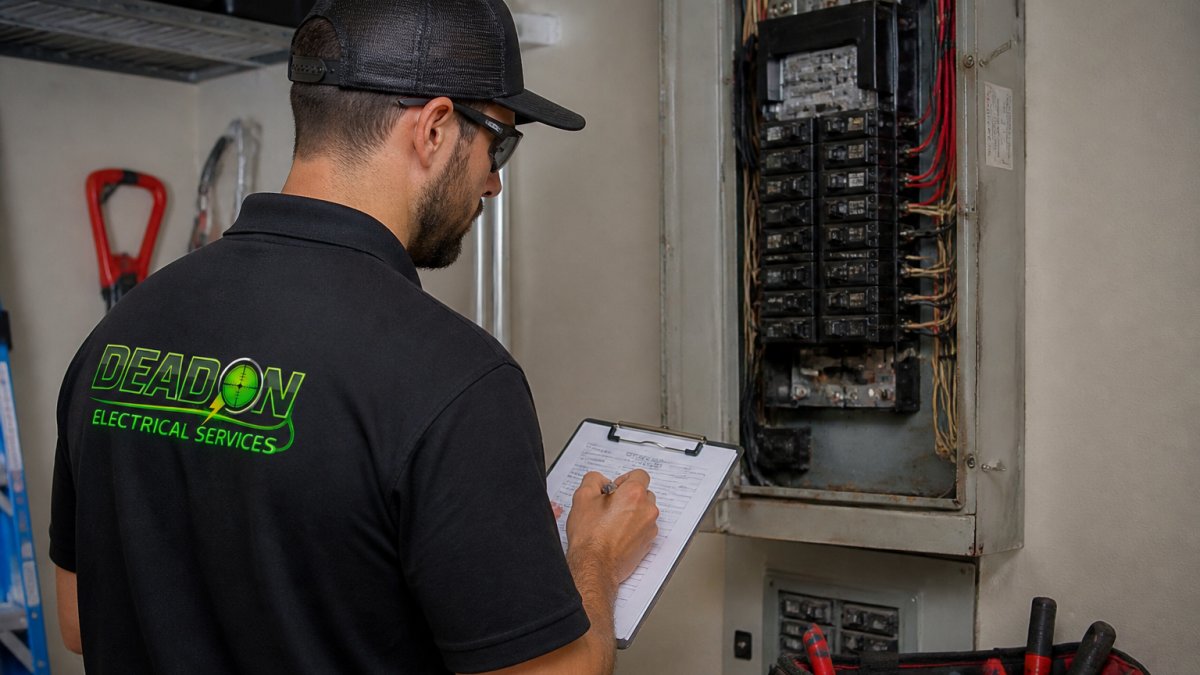
Electrical panel replacement is the highest-value upgrade on this list because every other circuit depends on it. An older panel may be a known hazardous design, have no spaces left for new breakers, or be rated below what the home now draws.
Panels that warrant evaluation, not just a breaker swap
A few panel designs and conditions come up repeatedly in older homes and should be evaluated by a licensed electrician rather than patched:
- Federal Pacific Stab-Lok panels. These have a documented history of breakers that fail to trip under overload. Many insurance carriers and home inspectors flag them, and the practical answer is replacement, not repair.
- Zinsco panels. Recognizable by the colored breaker handles and the aluminum bus. They are known for poor bus contact and breakers that weld closed instead of tripping.
- Fuse boxes. A fuse panel is not automatically unsafe, but it usually signals a service that was sized for a much smaller house, and fuse upgrades are limited. Most homeowners end up replacing the service rather than adding to it.
What the load calculation actually tells you
A proper load calculation tells you whether the existing service can carry what you plan to add. It accounts for square footage, major appliances, HVAC, the range and dryer, and any new load such as an EV charger or pool equipment. Two homes on the same street can produce different answers because one has a heat pump and the other a gas furnace.
The result usually points to one of three outcomes: the existing service has capacity and only a sub-panel or new circuit is needed; the service is marginal and load management can buy time; or the service needs a full upgrade. A 100-amp service was generous for a 1970s ranch home. It is tight for a house running central air, a pool pump, a hot tub, and an EV charger.
Service size and what changes
When a panel is replaced, service size is part of the conversation. Moving from 100 amps to 200 amps is the common path for a home adding EV charging or a pool, and it usually means new service conductors, a new meter base, and utility coordination.
Panel work involves energized equipment and must be done by a licensed electrician, not attempted as a weekend project. If you are weighing a panel replacement in Las Vegas, our electrical panel replacement service walks through what the job involves.
2. AFCI Breaker Installation for Arc Fault Protection
AFCI breaker installation adds protection against arc faults, the small sparks that form when wiring insulation fails or a connection loosens. Arc faults can be a cause of residential electrical fires and often start inside walls where nobody sees them.
Older wiring in Las Vegas homes has spent decades cycling through extreme summer heat, which hardens insulation and loosens terminations. An AFCI breaker detects the signature of an arc and trips before it becomes a fire.
3. Whole Home Surge Protection Against Power Spikes
Whole home surge protection is a device installed at the service panel that diverts large voltage spikes before they reach your appliances. Summer storms, utility switching, and grid events all send spikes through the system.
Point-of-use strips protect one outlet. A panel-mounted device can protect the whole house, including the HVAC compressor and pool equipment. Pair it with a grounding review so the surge has somewhere safe to go.
4. How to Install Dimmer Switches for LED Lights
How to install dimmer switches for LED lights comes down to one rule: the dimmer and the bulb must be compatible. LED drivers do not dim like incandescent filaments, and a mismatched dimmer produces flicker, buzz, or a bulb that dies early.
We recommend LED-rated dimmers with a low minimum load and check the bulb’s compatibility list before installing. Switch replacement involves energized wiring, so we handle it rather than walking a homeowner through it.
5. GFCI and AFCI Outlet Upgrades for Safety
GFCI and AFCI outlet upgrades put protection at the point of use, which matters most in kitchens, bathrooms, garages, and anywhere near water. GFCI outlets shut off when they detect a ground fault. AFCI outlets detect arc signatures.
Older homes often have no GFCI protection at all, or early units that no longer trip. Pool and spa areas are a particular concern.
6. Level 2 EV Charger Installation and Dedicated Circuits
Level 2 EV charger installation requires a dedicated 240-volt circuit sized for the charger and a panel that can carry the added load. Older homes frequently fail that second test, which is why the panel upgrade usually comes first. In older homes in Las Vegas, the garage is also the hottest room on the property for much of the year, which changes how the charger and its circuit should be installed.
Hardwired versus NEMA 14-50
There are two common ways to connect a Level 2 charger, and the choice affects the circuit and the flexibility you keep:
- Hardwired. The charger is wired directly to the circuit with no plug. This is the typical approach for a Tesla Wall Connector and most modern wall units. It allows the circuit to be sized to the charger’s maximum output and avoids a plug connection in a hot garage.
- NEMA 14-50 outlet. A 240-volt, 50-amp receptacle that the charger plugs into. It is the more flexible option if you may change chargers or want a portable unit, but the circuit still has to be dedicated and the outlet has to be a quality, correctly torqued device. A cheap receptacle on a circuit that pulls continuous current for hours is a known failure point.
Either way, the circuit is dedicated. Nothing else shares it.
Load calculation and load management
The load calculation from the panel section is the gate for EV charging. A charger running for hours is a continuous load, and the calculation has to account for it alongside the air conditioner, the pool pump, and everything else. Three outcomes are common:
- Capacity exists. A dedicated circuit is added and the charger is installed.
- Capacity is marginal. A load management device can pause or reduce charging when the house is near its service limit. This can delay or reduce the scope of a service upgrade, but it has to be sized against the actual calculation, not a guess.
- Capacity is not there. The honest answer is a panel or service upgrade before the charger goes in.
Heat, conduit, and the garage
A garage in this climate reaches temperatures that shorten the life of electronics and stress connections. We size conductors for the actual run and load, keep the charger out of direct sun where possible, and check that breakers and terminations are rated for the environment.
If you are planning a charger in Summerlin or anywhere in the valley, our EV charger installation service covers the panel check, the circuit, and the permit.
7. LED Lighting and Recessed Fixture Retrofits
LED retrofitting cuts the heat load in a house, and in this climate that matters. Older recessed fixtures with incandescent bulbs push heat into the ceiling assembly. LED retrofits run cooler and use a fraction of the power.
We also see older recessed cans with damaged thermal cutouts and loose connections. Replacing the trim and lamp together solves the light quality and heat problems at once.
8. Dedicated Circuits for Modern Loads
Dedicated circuits are the quiet upgrade nobody asks for until a breaker starts tripping. A modern household runs a microwave, an air fryer, a space heater, and a hair dryer on circuits designed for a toaster.
Adding dedicated circuits for the kitchen, laundry, garage, and home office spreads the load and stops nuisance trips. This is also where a homeowner learns whether the panel has capacity left, which is why we check it before quoting the work.
9. Bonding and Grounding Review
Grounding gives fault current a safe path back to the source so a breaker can trip. Bonding ties metal parts together so they stay at the same voltage.
A grounding review checks the electrode connection, the bonding of water and gas piping, and the integrity of the equipment ground path. Without it, GFCI and AFCI devices cannot do their jobs reliably.
10. Smart Lighting Controls and Load Management
Smart lighting controls let a homeowner schedule exterior lighting, dim rooms remotely, and cut standby waste. Load management devices go further by pausing a large load, like an EV charger, when the house nears its capacity.
For older homes with limited service capacity, load management can delay or reduce the scope of a service upgrade. We size it against the actual load calculation, not a guess.
Wiring Hazards, Permits, and Insurance: What Most Guides Skip
Two hazards deserve their own mention. Knob-and-tube wiring and aluminum branch wiring both appear in older homes, and both carry elevated fire risk when disturbed or improperly spliced. Neither should be repaired by a homeowner.
Permits and inspections matter for a practical reason. Permitted work is inspected, and inspected work is documented. Some insurers ask about the age and condition of the electrical system, and unpermitted additions can complicate a claim.
Frequently Asked Questions
How do I know if my older Las Vegas home needs electrical panel replacement?
Signs include frequent tripped breakers, rust or burn marks on the panel, fuses instead of breakers, or a service that cannot keep up with modern appliances. If your panel is a known problematic brand or you are adding an EV charger or major appliances, a licensed Las Vegas electrician should perform a load calculation and recommend electrical panel replacement if needed.
Is whole home surge protection worth it in Las Vegas?
Yes. Southern Nevada’s monsoon storms and utility grid switching can send power spikes through your wiring that damage electronics, HVAC controls, and appliances. Whole home surge protection installed at the panel by a licensed electrician provides a first line of defense, and it pairs well with point-of-use surge strips.
Can I install AFCI breakers or dimmer switches myself?
AFCI breaker installation and panel work involve energized equipment and should be performed by a licensed electrician for safety and code compliance. Dimmer switch replacement is less complex, but it still requires turning off the circuit, verifying compatibility with LED fixtures, and following manufacturer instructions. If you are unsure about wiring or grounding, hire a Las Vegas electrician rather than risk shock or fire.
Older homes in Las Vegas have carried more load than they were built for, and the fixes are known. Dead On Electrical Services handles panel replacement, AFCI and GFCI protection, whole home surge protection, EV charger circuits, and LED retrofits across the valley, with same-day service and a 10% discount for military, seniors, and first responders. Call (725) 605-6888 to schedule an assessment and get a clear answer on what your home actually needs.
