
Table of Contents
- Why Dedicated Circuits Matter for Kitchen Appliances
- What Kitchen Appliances Need Their Own Circuit
- How Many Kitchen Circuits Are Required by Code
- Kitchen Circuit Overload Symptoms and Warning Signs
- Checking Your Electrical Panel Capacity for New Circuits
- Steps to Install a Dedicated Circuit for Kitchen Appliances
- Code Requirements and Permits for Kitchen Circuits
- When to Call a Licensed Electrician in Las Vegas
- Frequently Asked Questions
Last Updated: October 14, 2026
Installing Dedicated Circuits for Kitchen Appliances in Las Vegas
Kitchen appliances demand more power than most homeowners realize. A microwave, dishwasher, and refrigerator running at once can overload a standard circuit, causing tripped breakers, flickering lights, and dead outlets.
Installing dedicated circuits for kitchen appliances solves this problem. A dedicated circuit runs directly from your electrical panel to a single appliance.
This guide covers why dedicated circuits matter, which appliances need them, the code requirements for Las Vegas kitchens, overload warning signs, and when to call a licensed electrician.
Why Dedicated Circuits Matter for Kitchen Appliances
A dedicated circuit is a branch circuit that serves only one appliance or outlet, carrying all its amperage to a single load instead of sharing power with other devices.
Kitchen appliances create electrical stress. A 1,500-watt microwave draws heavy current, a dishwasher cycles through heating and drying phases, and a refrigerator runs 24/7.
Overloaded circuits cause breakers to trip repeatedly.
Dedicated circuits prevent overload. Each appliance gets its own pathway sized for its demand, with a breaker matched to the wire gauge and appliance amperage, no competition for power, no unexpected tripping.
What Kitchen Appliances Need Their Own Circuit
Not every kitchen appliance requires a dedicated circuit. Code requirements and practical electrical design determine which ones do.
Appliances that require dedicated circuits:
- Electric ranges or cooktops (240-volt, 40-50 amps)
- Wall ovens (240-volt, 40-50 amps)
- Dishwashers (120-volt, 20 amps minimum)
- Garbage disposals (120-volt, 15 amps minimum)
- Microwave ovens (120-volt, 20 amps minimum)
- Refrigerators (120-volt, 15 amps)
Appliances that benefit from dedicated circuits:
- Toasters, coffee makers, and small appliance outlets
- Range hoods (120-volt, 15 amps)
- Ice makers (120-volt, 15 amps)
The difference comes down to code: Nevada building codes mandate dedicated circuits for certain high-draw appliances, while for others it’s best practice but not legally required.
A refrigerator doesn’t legally need its own circuit in all cases, but because it runs continuously, sharing a circuit can cause nuisance breaker trips. Most electricians recommend a dedicated circuit anyway.
How Many Kitchen Circuits Are Required by Code
The National Electrical Code (NEC) sets minimum kitchen circuit requirements.
Kitchen circuit minimums:
- At least two 20-amp small-appliance branch circuits for countertop outlets
- One dedicated 20-amp circuit for the dishwasher
- One dedicated 20-amp circuit for the garbage disposal
- One dedicated 20-amp circuit for the microwave
- One dedicated 15-amp or 20-amp circuit for the refrigerator
- A separate 240-volt circuit for the range or cooktop (40-50 amps)
These are minimums. A modern kitchen often has more circuits to accommodate today’s appliance use.
The two small-appliance circuits power your countertop outlets. Two circuits instead of one lets you run multiple small appliances, toasters, coffee makers, and more, without tripping a breaker.
Current electrical codes require GFCI protection for kitchen receptacles and for certain appliance outlets. The exact requirements depend on the appliance, voltage, installation and local amendments.
Kitchen Circuit Overload Symptoms and Warning Signs
Overloaded circuits send clear signals. Recognizing them tells you when to call a professional.
Signs your kitchen circuits are overloaded:
- Breaker trips when you run multiple appliances at once
- Lights dim when the microwave or dishwasher runs
- Outlets feel warm to the touch
- Burning smell near outlets or the electrical panel
- Outlets stop working intermittently
- Breaker trips even with only one appliance running
A tripping breaker stops a dangerous situation: it detects current exceeding the circuit’s rated amperage and opens the circuit to prevent overheating.
If a breaker trips once, reset it and monitor.
Dimming lights are another key indicator.
A warm outlet is a red flag. Outlets should never feel hot. Heat indicates resistance in the connection, which generates dangerous temperatures. Stop using that outlet immediately and have it inspected.
Checking Your Electrical Panel Capacity for New Circuits
Before installing new dedicated circuits, you need to know if your electrical panel has available space and capacity.
Understanding circuit breakers and load calculations
Your electrical panel is a metal box containing breakers, each controlling one circuit. The panel has a total amperage rating, commonly 100, 150, or 200 amps.
Adding new circuits means adding new breakers, so the panel needs both physical space for a breaker and enough total amperage capacity for the new load.
A 100-amp panel is common in older Las Vegas homes.
Available breaker spaces and available electrical capacity are two separate issues. An electrician performs a load calculation based on the home’s connected and calculated loads—not by simply adding the numbers printed on the breakers—to determine whether the existing service can support additional equipment.
When a panel upgrade becomes necessary
A panel upgrade replaces your existing panel with a larger one, say, 100 amps to 150 or 200 amps, giving you more breaker slots and higher total capacity.
Panel upgrades are necessary when:
- Your panel has no available breaker slots
- Your total circuit load is near or exceeds the panel’s rating
- You’re adding significant new loads (like an EV charger or major appliance)
- Your panel is damaged or outdated
In Las Vegas, panel upgrades are common in homes built before 2000, where 100-amp service is often inadequate for modern demand.
A panel upgrade is a significant project requiring a licensed electrician, a building permit, and an inspection, and the utility may need to verify the work. A properly sized panel is essential for safe, reliable service.
Steps to Install a Dedicated Circuit for Kitchen Appliances
Installing a dedicated circuit involves planning, safety precautions, running wire, and connecting breakers. Here’s what the process looks like.
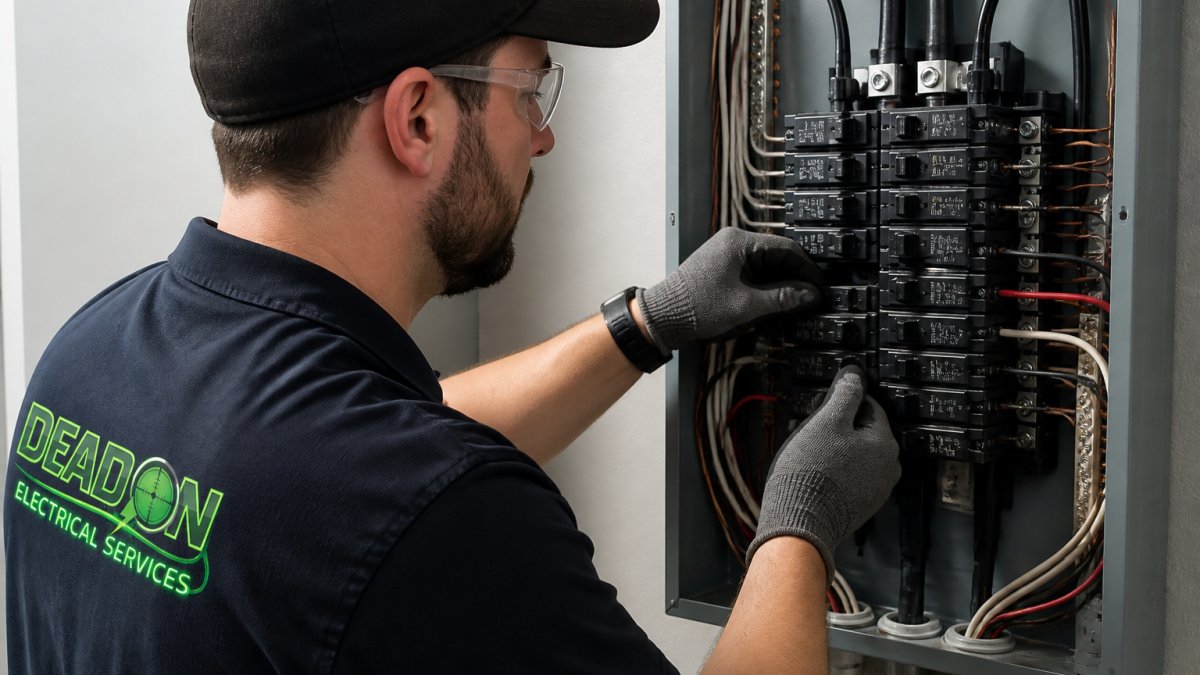
Step 1: Plan the circuit route and breaker size
Before any work begins, plan the entire circuit.
Choose the correct breaker size for the appliance. A 20-amp breaker with 12-gauge wire serves most kitchen appliances.
The breaker size must match both the appliance’s nameplate rating and the wire gauge used. Wire gauge and breaker amperage are linked.
Plan the wire route to minimize exposure. Wire should run through walls, not exposed in living areas. It should avoid sharp edges, excessive heat, and moisture.
Code Requirements and Permits for Kitchen Circuits
Nevada follows the National Electrical Code (NEC) for electrical safety. Kitchen circuits must meet specific code requirements.
Kitchen circuit code requirements:
- Dedicated circuits for dishwasher, garbage disposal, and microwave
- 20-amp minimum for small-appliance circuits
- GFCI protection for outlets within 6 feet of a sink
- Proper wire gauge matched to breaker amperage
- All work permitted and inspected
Permit requirements depend on the local jurisdiction, but within the City of Las Vegas, adding permanent wiring or a new dedicated circuit generally requires an electrical permit and inspection.
Permits cost money and take time, but they protect you. An inspection ensures the work is safe and meets code.
In Las Vegas, the building department requires permits for all electrical work except minor repairs. Installing a new circuit definitely requires a permit.
When to Call a Licensed Electrician in Las Vegas
Some electrical work homeowners can do themselves. Panel work and high-amperage circuits should always be done by a licensed electrician.
You can run wire through walls, install outlets, and connect devices to outlets.
A licensed electrician brings expertise, tools, and insurance. They know current code requirements. They pull permits and arrange inspections.
If your kitchen has frequent breaker trips, dim lights, or warm outlets, call Dead On Electrical Services.
Dead On Electrical Services has been serving the Las Vegas Valley since 2018. We’re licensed, insured, and committed to industry-standard electrical work.
Frequently Asked Questions
What kitchen appliances need their own circuit?
Major kitchen appliances that draw significant power require dedicated circuits: refrigerators, electric ranges or cooktops, dishwashers, garbage disposals, and microwave ovens. A dedicated circuit means that appliance is the only device on that branch circuit, preventing overloads. Smaller appliances like toasters or coffee makers can share a general-purpose kitchen receptacle circuit, but high-draw appliances must have their own breaker and wiring to meet electrical code and operate safely.
How many kitchen circuits are required?
The National Electrical Code requires a minimum of two 20-ampere small-appliance branch circuits for kitchen countertop receptacles, plus separate dedicated circuits for major appliances like refrigerators, ranges, and dishwashers. Most kitchens need at least four to six circuits total: two for general countertop use, one for the refrigerator, one for the range, and one for the dishwasher. Your specific requirements depend on your appliance layout and local code amendments.
What are signs my kitchen circuit is overloaded?
Kitchen circuit overload symptoms include frequently tripping circuit breakers, flickering lights when appliances run, buzzing sounds from outlets or the breaker panel, warm or discolored outlets, and appliances that shut off unexpectedly. If you notice a burning smell near outlets or the panel, stop using that circuit immediately and contact a licensed electrician. Overloaded circuits create fire hazards and indicate that dedicated circuits are needed or existing ones are undersized.
Can I install a dedicated circuit myself?
Installing a dedicated circuit involves working inside your electrical panel and running wiring through walls—both require proper training and licensing. Nevada law requires a licensed electrician to perform electrical work. Mistakes can cause electrical fires, shocks, or code violations that void insurance coverage. Dead On Electrical Services can handle the complete installation safely and ensure it meets all local code requirements and passes inspection.
If you’re planning to install dedicated circuits for kitchen appliances in Las Vegas, Dead On Electrical Services can handle the complete project from planning through inspection. We’ll ensure your kitchen has the electrical capacity it needs and that all work meets current code. Call (725) 605-6888 to schedule a consultation with one of our licensed electricians.