
Table of Contents
- Why Henderson Homeowners Need a Dedicated EV Charger Circuit
- Level 2 EV Charger Installation Requirements for Your Home
- Does Your Panel Need Residential Electrical Panel Upgrades?
- The EV Charger Permitting Process in Henderson Explained
- Hardwired vs. Plug-In: Choosing the Right Setup
- Smart Charging Features and Utility Rebates
- Heat, Dust, and Maintenance: Caring for Your Charger in the Desert
- Conclusion: Schedule Your EV Charger Installation Service
- Frequently Asked Questions
Last Updated: September 7, 2026
Why Henderson Homeowners Need a Dedicated EV Charger Circuit
Charging an electric vehicle from a standard 120V receptacle is a legitimate option, but it is much slower than Level 2 charging installation. A Level 2 charger uses 240 volts and can add substantially more range overnight. Depending on the home, installation may use an existing compatible circuit or require a new dedicated circuit.
EV charging is a continuous electrical load, so the receptacle, wiring, breaker, and connections must be properly sized and in good condition. An electrician can evaluate an existing circuit before it is used for regular EV charging.
Watch Out: Do not assume that any existing 120V or 240V outlet is automatically suitable for EV charging. The circuit and connection should match the charger’s electrical requirements.
Level 2 EV Charger Installation Requirements for Your Home
A Level 2 charging station operates on 240V, similar to what your dryer or oven uses. This means your electrical panel must have available capacity for a new double-pole breaker, typically 40 to 60 amps. The installation also requires either a NEMA 14-50 outlet or a hardwired connection, depending on the charger you choose.
The National Electrical Code (NEC) treats EV charging as a continuous load, meaning the circuit must be rated at 125 percent of the charger’s draw. A 40-amp charger, for instance, requires a 50-amp circuit. This is where many homeowners get into trouble: they assume any 240V outlet will work, but the wiring, breaker, and outlet must all match the charger’s amperage.
Does Your Panel Need Residential Electrical Panel Upgrades?
Many Henderson homes were built 20 to 40 years ago with 100-amp panels. An EV charger alone can draw 40 to 50 amps, which often maxes out an older panel when combined with your AC, oven, and other appliances. If your panel is full or outdated, residential electrical panel upgrades become necessary before any charger installation.
A licensed electrician performs a load calculation to determine whether your panel can handle the added demand. This involves adding up every circuit in your home and comparing the total to your panel’s rating. If your panel is undersized, you will need a service upgrade, typically to 200 amps, before the charger can be installed safely.
If the existing electrical service cannot support the desired charger load, a panel or service upgrade may be one option. In some homes, lower-amperage charging or approved load-management equipment can provide another solution.
Pro Tip: If you have a 100-amp service or limited breaker space, have the electrical system evaluated before assuming a panel upgrade is necessary.panel upgrade is part of the project.
The EV Charger Permitting Process in Henderson Explained
Permit requirements for EV charger installations in Henderson depend on the scope of work. Installing a new dedicated circuit, modifying the electrical panel, or making other significant electrical changes may require a permit and inspection. Homes that are already prewired for EV charging or have an existing compatible 240-volt circuit may have different permitting requirements. Your electrician can determine what applies to the specific installation before work begins.
When a permit is required, the process may include:
- Application: Your electrician submits the permit application, which includes a detailed description of the work, the charger model, and the circuit specifications.
- Plan Review (if needed): For most residential charger installations, a simple over-the-counter permit is sufficient. However, if a panel upgrade or service change is involved, the city may require a more detailed plan review to ensure the load calculations are correct.
- Rough-In Inspection: Once the wiring and conduit are run, but before the drywall is closed up or the charger is mounted, an inspector will visit to verify the wire gauge, breaker size, and grounding are all correct.
- Final Inspection: After the charger is mounted and connected, a final inspection confirms the unit is properly installed, the connections are torqued to spec, and everything is operational and safe.
Permit and inspection requirements depend on the scope of the installation. A new branch circuit, panel modification, service change, or other significant electrical work may require permitting, while an installation using existing electrical infrastructure may have different requirements. The applicable requirements should be confirmed before work begins. An unpermitted installation can also create problems when you sell your home, as the inspector may flag it as an unapproved modification. Furthermore, your homeowner’s insurance may not cover damage from an unpermitted electrical fire. The cost of the permit is a small price to pay for the peace of mind that your installation is safe and legal.
The inspection process is not about being punitive; it’s about catching mistakes. An inspector will check that the breaker is the correct amperage for the wire gauge and that the charger is properly grounded. They are looking for the same things a good electrician checks on every job. When you hire a licensed professional, these inspections are routine and pass without issue, giving you documented proof that your system is up to code.
Hardwired vs. Plug-In: Choosing the Right Setup
The main decision after choosing your charger is whether to hardwire it or install a plug-in model with a NEMA 14-50 outlet. A hardwired installation connects the charger directly to the circuit, which is generally considered safer for outdoor or continuous use. Plug-in models offer flexibility if you might move the charger or take it with you.
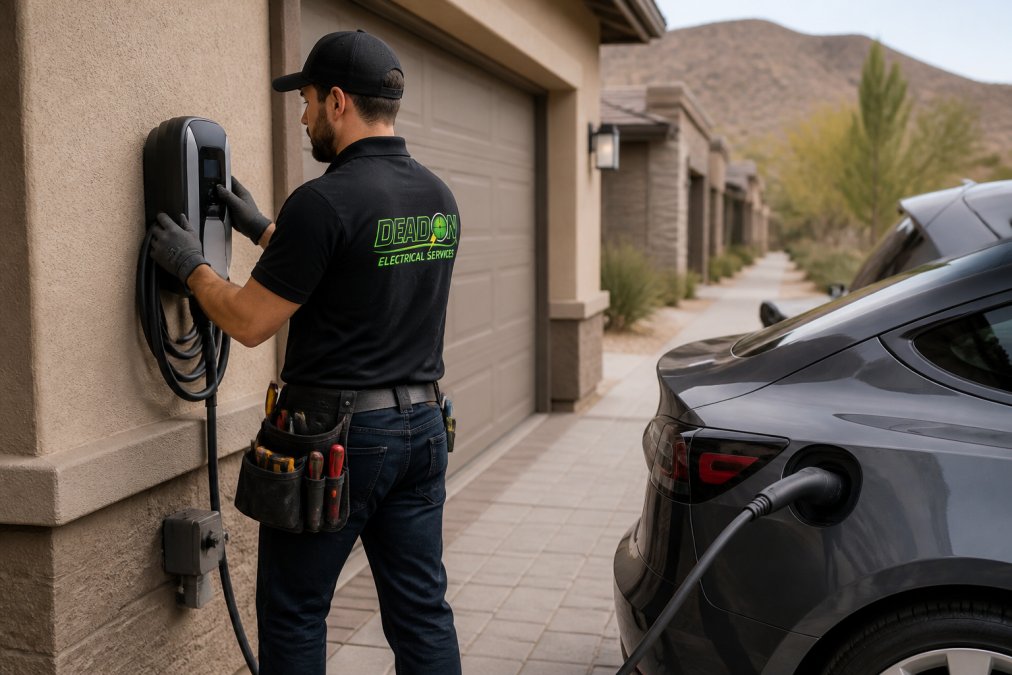
For most Henderson homeowners, hardwired is the better choice. The connection is more secure, there is no risk of a loose outlet connection overheating, and some utility rebates require a hardwired installation. Plug-in setups work well for portable chargers, but they add a potential failure point that hardwired connections avoid.
Smart Charging Features and Utility Rebates
Beyond the hardware, the two biggest financial levers for a Henderson homeowner are smart charging features and available rebates. This is where you can save money every month, not just on the initial installation.
The Financial Case for Smart Charging
Modern EV chargers are ‘smart’, they connect to your Wi-Fi and allow you to schedule charging sessions. This is a game-changer in the Las Vegas Valley because NV Energy offers a time-of-use (TOU) rate plan. Under this plan, electricity costs significantly less during off-peak hours, typically overnight. A smart charger lets you set it to start charging at, say, 12:01 AM–8:00 AM, ensuring you’re always drawing power at the lowest rate.
Without a smart charger, you might plug in your car when you get home at 6:00 PM, during peak demand when electricity is most expensive. Over a month, that difference can add up to a noticeable amount on your bill. The charger’s app also gives you detailed data on your charging history, so you can see exactly what each charge costs.
Claiming the NV Energy Rebate
NV Energy currently offers residential managed-charging incentives for eligible customers using qualifying Level 2 smart chargers. Program requirements, qualifying equipment, incentive amounts, and participation requirements can change, so homeowners should check the current NV Energy program before purchasing a charger.
The Federal Tax Credit
The federal Alternative Fuel Vehicle Refueling Property Credit previously provided a potential tax credit for qualifying residential EV charging equipment. Under current federal law, equipment had to be placed in service by June 30, 2026 to qualify. New residential installations completed after that date are no longer eligible for this credit.
How an Electrician Helps You Qualify
A licensed electrician who is familiar with these programs can guide you through the process. They can confirm that the charger you’ve selected is on the approved list, ensure the installation is hardwired to meet the requirements, and provide the necessary paperwork for both the NV Energy rebate and the federal tax credit. This is a service that goes beyond just wiring a circuit, it’s about making sure you get the maximum return on your investment.
A common pattern is a homeowner who buys a charger without checking eligibility, only to find out later they’ve missed out on hundreds of dollars in savings. Don’t let that be you. Ask your electrician about the rebate process during the initial consultation so you can make an informed decision before any money changes hands.
Heat, Dust, and Maintenance: Caring for Your Charger in the Desert
The Las Vegas Valley presents unique challenges for outdoor electrical equipment. Summer temperatures regularly exceed 110 degrees, and dust gets into everything. Your EV charger, if mounted outside, needs to handle both. Most quality chargers are rated for outdoor use, but direct sun exposure can shorten their lifespan.
Check the charging cable regularly for cracks or wear, especially after summer. The heat degrades rubber insulation faster in the desert than in cooler climates. Keep the charging port clean and free of dust, and have the connections inspected periodically by a licensed electrician to catch loose wiring before it becomes a problem.
Conclusion: Schedule Your EV Charger Installation Service
Installing an EV charger is more involved than simply adding an outlet. Depending on the existing electrical system and scope of work, the project may involve a load calculation, new circuit, panel work, permitting, or inspection.
At Dead On Electrical Services, we handle the entire process for Henderson homeowners, from the initial load calculation to the final inspection. Our licensed and insured electricians have performed Level 2 EV charger installations across the Las Vegas Valley since 2018, and we offer a 10 percent discount for military, seniors, and first responders. Call Now
Frequently Asked Questions
Can my existing electrical panel support an EV charger?
Often, yes, but it depends on your panel’s capacity and the charger’s amperage. A Level 2 charger typically needs a dedicated 240V circuit, which requires two open breaker slots and enough spare capacity. If your home has an older 100-amp panel with electric heat, air conditioning, and a pool, you may need a residential electrical panel upgrade. A licensed electrician can perform a load calculation to determine if your current panel can safely handle the added demand of an EV charger.
Do I need a permit for EV charger installation in Henderson?
Yes. Most jurisdictions, including Henderson, require an electrical permit for a new dedicated circuit and EV charger installation. The EV charger permitting process typically involves submitting an application, having the work inspected, and getting final approval. A licensed electrician handles this process for you, ensuring the installation meets the National Electrical Code (NEC) and local building codes. Skipping the permit can create safety hazards and problems when you sell your home.
How much should it cost to have an EV charger installed?
The cost varies significantly based on your home’s existing electrical setup, the charger’s amperage, and whether you need a panel upgrade or a long conduit run. A simple installation close to your panel costs less than a complex job requiring a residential electrical panel upgrade. The best way to get an accurate figure is to request an estimate from a licensed electrician who can assess your specific situation and provide a detailed quote.
Why should I hire a licensed electrician for EV charger installation?
EV charger installation is not a DIY project. It involves high voltage, a dedicated circuit, and strict compliance with the National Electrical Code (NEC). A licensed electrician ensures the work is safe, up to code, and properly permitted. They perform load calculations to prevent overloading your panel, which reduces the risk of electrical fires. Hiring a professional also protects your warranty and your home. This is why you need a licensed electrician for EV charger installation.