
Table of Contents
- How Old Is Too Old? The Lifespan of a Residential Electrical Panel
- 5 Warning Signs Your Old Electrical Panel Is Unsafe
- Signs of a Bad Circuit Breaker You Should Never Ignore
- Brands and Panels Known for Safety Problems
- Why Your Old Panel Can’t Handle a Modern Home’s Electrical Load
- Electrical Panel Upgrade Requirements: What a Replacement Involves
- What Does Electrical Panel Replacement Cost?
- A Homeowner’s Visual Inspection Checklist
- Frequently Asked Questions
Last Updated: September 9, 2026
How Old Is Too Old? The Lifespan of a Residential Electrical Panel
A standard residential electrical panel is built to last roughly 25 to 40 years, but age alone doesn’t tell the whole story. An old electrical panel can remain perfectly safe if it was installed correctly, has been maintained, and hasn’t been overloaded. The real question is whether it can handle what you’re asking it to do today.
The National Electrical Code has raised the bar for safety over the decades. Panels installed before the 1980s often lack the grounding and bonding required today, and many weren’t designed for the number of circuits a contemporary home needs. If your home was built in the 1970s or earlier and still has its original panel, have it inspected by a licensed electrician before you add any major appliance.
5 Warning Signs Your Old Electrical Panel Is Unsafe
Several warning signs point to an old electrical panel that needs professional attention. They often indicate loose connections, overheating, or failing components that can lead to a fire.
Flickering Lights and Tripping Breakers
Flickering lights and repeated breakers trips frequently indicate an electrical problem that should be diagnosed. The cause could be an overloaded circuit, short circuit, ground fault, failing breaker, or another wiring issue.
Burning Smell, Scorch Marks, or Rust
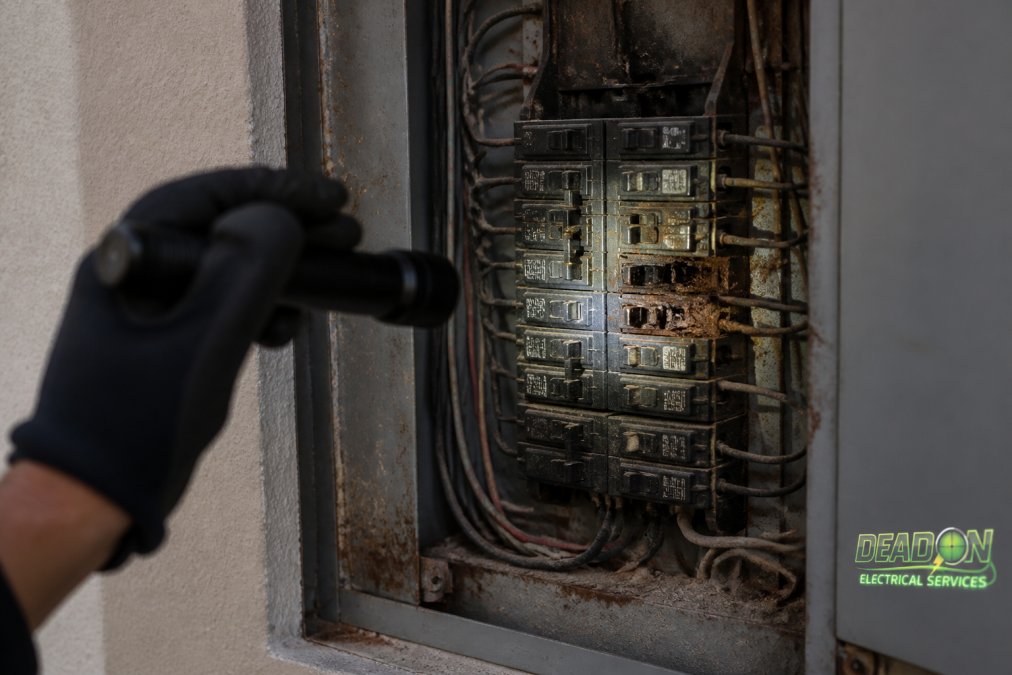
A burning smell near your panel, visible scorch marks on the breakers, or rust inside the panel box are serious red flags. Rust means moisture has gotten inside, which corrodes connections and creates resistance. Resistance generates heat, and heat is what starts electrical fires. Shut off the main breaker and call a licensed electrician right away.
Signs of a Bad Circuit Breaker You Should Never Ignore
A breaker that is unusually hot, smells burned, buzzes or crackles, will not reset, or repeatedly trips without an obvious overload should be inspected. These symptoms can indicate a failing breaker, loose connection, or another electrical problem.
Another sign is a breaker that stays “on” but doesn’t deliver power, indicating the internal mechanism has failed. Breakers wear out from normal use, and in a hot desert climate like Las Vegas, heat in an unconditioned garage or exterior wall accelerates that wear. A breaker showing any of these signs needs professional replacement, attempting it yourself while the panel is energized is extremely dangerous.
Brands and Panels Known for Safety Problems
Certain electrical panels installed between the 1950s and 1980s have well-documented design flaws that make them a genuine fire risk. Knowing whether you have one is the single most important step in assessing your old panel’s safety, because the breakers inside may not shut off power when a circuit is overloaded.
Federal Pacific Electric (FPE) Panels
Federal Pacific panels, commonly installed from the 1950s through the 1980s, are the most notorious. Their Stab-Lok circuit breakers are known to fail to trip on overload, letting a circuit draw far more current than the wiring is rated for and creating heat buildup inside your walls. The Consumer Product Safety Commission investigated these panels decades ago, and most licensed electricians will not work on them. If you see the Federal Pacific name on your panel label, or breakers with a distinctive narrow “Stab-Lok” design, plan on a replacement.
Zinsco Panels
Zinsco panels, installed around the same era, have a different but equally serious problem. Their breakers are known to weld themselves to the panel’s bus bar when they overload, so they physically cannot trip, the breaker stays stuck “on” and the circuit stays live. Zinsco panels also used aluminum bus bars that corrode over time, increasing resistance and generating heat. If your panel says Zinsco, or you see breakers with a red or blue handle and a “Z” logo, treat it as a high-priority replacement candidate.
Other Problematic Panels and Fuse Boxes
Beyond those two brands, certain Challenger, Pushmatic, and Sylvania panels from the same period have raised concerns. Their issues are less universal than FPE or Zinsco, but they’re old enough that internal components may have degraded. Older fuse panels can still provide overcurrent protection, but their age, limited capacity, condition, and compatibility with modern electrical demands may make an upgrade worth considering
How to Identify What You Have
Open the metal door on your panel (not the inner cover, that should stay on) and look at the label on the inside of the door or on the panel body for the manufacturer name and model number. If the label is missing or faded, the brand name is usually printed on each breaker handle. If you can’t identify the brand, that uncertainty alone is a reason to have a licensed electrician take a look.
The Insurance Angle Most Homeowners Miss
Many homeowners insurance companies now ask specifically about your panel brand when you apply for a policy or renew one. Homes with Federal Pacific or Zinsco panels are frequently declined for new coverage, or the insurer requires proof of panel replacement within a set timeframe before they’ll bind a policy. Some insurers refuse to renew once they learn a problem panel is present. If you’re buying a home, the appraisal or home inspection will often flag these brands, and the sale can stall until the panel is replaced. Before you call an electrician, ask your insurance agent whether your panel brand affects your coverage.
What Replacement Means for These Panels
For any of these problem panels, repair is rarely viable. Replacement parts are hard to find, and even a “fixed” FPE or Zinsco breaker is still a known failure risk. The standard recommendation is full panel replacement, removing the old panel and installing a new one with modern circuit breakers that meet current National Electrical Code standards. It’s not a small job, but it’s the only way to eliminate the risk.
If you see Federal Pacific, Zinsco, or any brand you don’t recognize on your panel, don’t wait for a breaker to fail. A licensed electrician can confirm what you have and give you a clear picture of your options. In the Las Vegas heat, where panels in garages and exterior walls already run hotter than in most climates, a panel with known design flaws is a risk you don’t want to carry.
Why Your Old Panel Can’t Handle a Modern Home’s Electrical Load
An old electrical panel was designed for a home that used far less electricity, maybe a washing machine, a refrigerator, and a few lights on each circuit. Today, that same home runs multiple televisions, computers, a microwave, an air conditioner, and a dozen devices charging at once. Older 60- or 100-amp services may have less available capacity for additional large electrical loads, but whether an upgrade is needed depends on an actual load calculation
EV Chargers, Smart Homes, and New Appliances
The biggest strain on older panels comes from what modern homeowners want to add. A Level 2 EV charger alone requires a dedicated 240V circuit drawing 30 to 50 amps, a huge portion of a 100-amp panel’s total capacity. Smart home systems, electric water heaters, and modern kitchen appliances all add to the load. When the panel can’t keep up, you get tripping breakers, flickering lights, and voltage drop, which can damage sensitive electronics.
That’s why we recommend a load calculation before you install an EV charger or undertake a major renovation. A load calculation determines whether the existing service has capacity for the additional load. If it does not, options may include reducing the charging load, using approved load-management equipment, or upgrading the electrical service, depending on the home and equipment being added.
Electrical Panel Upgrade Requirements: What a Replacement Involves
Electrical panel upgrade requirements come down to bringing your home’s service up to current code. A full replacement involves disconnecting utility power, removing the old panel, installing a new one with the correct amperage rating, and connecting all the branch circuits. The work requires a permit and a final inspection verifying the installation meets the National Electrical Code.
A service upgrade, different from a simple panel swap, also replaces the wiring from the utility connection to your panel. This is necessary when increasing amperage from 100 to 200 amps, because the old wiring and meter base may not be rated for the higher current. A licensed electrician handles coordination with the utility company and brings grounding and bonding up to standard. The process typically takes most of a day, with power off for several hours.
What Does Electrical Panel Replacement Cost?
Electrical panel replacement cost is one of the first questions every homeowner asks, and it’s also the hardest to answer with a single number. Understanding what drives the cost will help you ask the right questions when you get quotes.
What Drives the Price
Amperage. The most common upgrade is from an old 100-amp panel to a modern 200-amp panel, the standard for most single-family homes today because it provides enough capacity for central air conditioning, electric appliances, and future additions like an EV charger. If your home has a 60-amp panel, the jump to 200 amps is even more involved because the entire service entrance, the wiring from the utility pole to your meter and then to your panel, likely needs replacing.
Panel swap vs. service upgrade. A straight panel swap replaces the panel box and breakers but keeps the existing service wiring from the utility, only possible if your current service is already sized for the amperage you need. A full service upgrade replaces the panel, the meter base, and the wiring from the utility connection point. Most older homes with 100-amp panels need the full upgrade.
Condition of existing wiring. When your electrician opens up the wall, they may find corroded wires, aluminum branch circuits, or connections that have been overheating for years. Fixing these issues adds to the cost, but it’s not optional, you can’t connect new equipment to damaged wiring.
Local permit and inspection fees. Panel replacement requires a permit from your local building department and a final inspection. A licensed electrician will pull the permit and schedule the inspection as part of the job.
Realistic Cost Ranges
While every home is different, understanding what drives the cost will help you ask the right questions when you get quotes. These are ballpark figures, not quotes, the only way to get an accurate number is to have a licensed electrician assess your panel, service, and electrical load in person.
Why the Cheapest Quote Isn’t the Best Deal
Panel replacement is not a job where you want to cut corners. A proper installation includes the permit, the inspection, and the expertise to handle unexpected issues like corroded wiring or an outdated meter base. When comparing quotes, make sure each contractor is including the same scope of work, required permitting and inspections, panel equipment, and any necessary service or grounding upgrades
Questions to Ask Before You Hire
When you get quotes, ask each contractor: Will you pull the permit, or do I need to? What brand of panel and breakers will you install? Does your quote include the inspection? What happens if you find corroded wiring once you open the wall? A contractor who gives clear answers is worth more than one who gives you the lowest number and vague promises.
Financing and Insurance Options
Because panel replacement is a significant expense, many homeowners wonder about financing. Some electrical contractors offer payment plans, and home improvement financing through companies like Hearth or Snap Finance is an option for qualified homeowners. If your insurance company has flagged your panel as a condition of keeping your policy, ask whether they offer any credit or discount for completing the upgrade, some do.
For an accurate estimate on your specific panel, contact Dead On Electrical Services. We’ll assess your current panel, your home’s electrical load, and what you’re planning to add, then give you a firm quote based on your actual situation, not a guess over the phone.
A Homeowner’s Visual Inspection Checklist
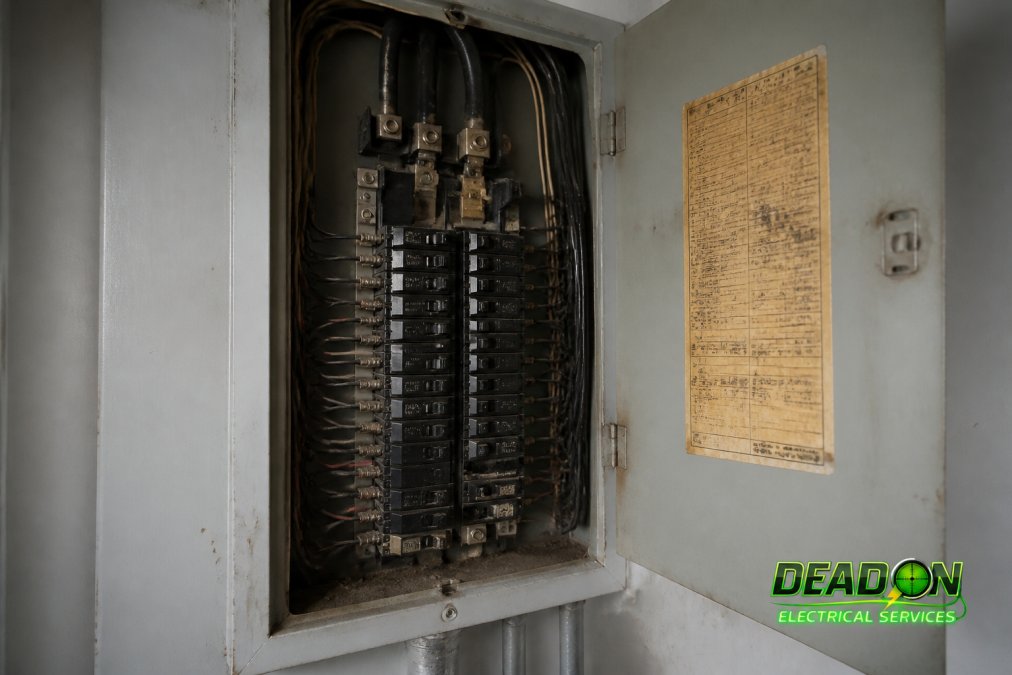
You can do a safe visual inspection of your panel without opening the dead front cover, which should only be removed by a licensed electrician. Start by looking at the outside of the panel for rust, dents, or signs of water damage, and check the wall around it for discoloration indicating heat damage. Then open the panel door and note any breakers that are discolored, have scorch marks, or look different from the others.
|
What to Check |
What to Look For |
Action Needed |
|---|---|---|
|
Panel exterior |
Rust, dents, water stains |
Call an electrician if damaged |
|
Breaker faces |
Scorch marks, discoloration, melting |
Call an electrician immediately |
|
Breaker behavior |
Warm to touch, buzzing, frequent tripping |
Call an electrician for diagnosis |
|
Panel brand |
Federal Pacific, Zinsco, or unknown |
Schedule an inspection |
|
Wall around panel |
Burn marks or discoloration |
Call an electrician immediately |
Listen for any buzzing or crackling sounds coming from the panel. A visual inspection can catch obvious problems, but it can’t detect loose connections or corroded bus bars inside the panel, those issues, along with thermal imaging to spot hot spots, are part of a professional inspection. If your panel is older than 25 years, shows any of the warning signs above, or you’re planning to add a major appliance, have a licensed electrician take a look. In the Las Vegas heat, where panels in garages and exterior walls run hotter than in most climates, a professional inspection every few years is money well spent.
If your panel is showing its age or you’re planning to add an EV charger or new appliances, don’t wait for a problem to force your hand. Dead On Electrical Services provides licensed, insured electrical panel inspections, upgrades, and replacements throughout the Las Vegas area. Our team handles everything from a simple breaker replacement to a full 200-amp service upgrade. Call Dead On Electrical Services today to schedule an inspection and get your home’s electrical system ready for whatever you plug in next.
Frequently Asked Questions
Which electrical panels are uninsurable?
Insurance companies often refuse coverage for panels from brands with known safety defects, such as Federal Pacific Electric (FPE) Stab-Lok and Zinsco panels. These panels have documented failure rates that create a fire hazard. If your home has one of these, your insurer may require a replacement before issuing a policy. A licensed electrician can identify your panel brand and help you understand your options.
What is the average lifespan of a residential electrical panel?
Most residential electrical panels last 25 to 40 years, but that assumes they were installed correctly and maintained. In practice, an old electrical panel can become unsafe well before that range if it has corrosion, loose connections, or is overloaded by modern demand. The safest approach is to have a licensed electrician inspect any panel older than 25 years, especially before you add new circuits or large appliances.
Can an old electrical panel cause flickering lights or power surges?
Yes. Flickering lights are often the first sign of a loose connection or an overloaded circuit inside an old electrical panel. As breakers age, they can also fail to trip properly or trip too easily, which causes intermittent power loss. These symptoms point to arcing and overheating, both of which are serious fire hazards that require prompt attention from a licensed electrician.
What is the difference between a panel upgrade and a service change?
A service change replaces everything from the utility connection point down to your new panel, including the meter socket and the wiring between them. A panel upgrade typically swaps only the panel enclosure and breakers, keeping the existing service wires. If you need more amperage, say going from 100 to 200 amps, you will need a full service change. A licensed electrician can assess your current setup and recommend the right scope.