
Table of Contents
- Why LED Lighting Upgrades Matter for Your Home
- Energy Efficiency and Lower Operating Expenses
- Long Lifespan Means Fewer Replacements
- Residential LED Retrofit Benefits Explained
- Outdoor LED Lighting for Pools and Spas
- LED Lighting Installation Cost and ROI
- Better Light Quality and Design Flexibility
- Environmental Impact and Sustainability
- Frequently Asked Questions
Last Updated: September 24, 2026
Why LED Lighting Upgrades Matter for Your Home
LED lighting upgrades have become one of the most practical investments a homeowner can make. Whether you’re replacing outdated incandescent bulbs, updating recessed lighting, or adding new fixtures to your home, switching to LED technology delivers real, measurable benefits that go beyond just saving money on your electric bill.
The shift to LED lighting has fundamentally changed what homeowners expect from their lighting. Modern LED bulbs produce the same warm, natural light quality that incandescent bulbs delivered for over a century, without the heat, the fragility, or the constant replacement cycles. At Dead On Electrical Services, we’ve seen homeowners benefit from LED systems across residential properties throughout the Las Vegas Valley, and the feedback is consistent: homeowners are surprised by how much brighter their homes feel and how much less they’re paying each month.
This guide covers the practical benefits of LED lighting upgrades for your home, from energy efficiency and long-term cost savings to design flexibility and environmental impact. We’ll also address the real-world considerations, like retrofit options and how to calculate your return on investment, that help you make the right decision for your property.
Energy Efficiency and Lower Operating Expenses
LED bulbs use 75-80% less energy than traditional incandescent bulbs to produce the same amount of light. A typical 60-watt incandescent bulb can be replaced with a 9-watt LED that produces identical brightness. Over the course of a year, that single fixture saves meaningful energy.
The efficiency difference becomes even more significant when you consider how lighting adds up across your entire home. If your house has 30-40 light fixtures, a typical count for most residential properties, switching all of them to LED cuts your lighting energy consumption dramatically. In a climate like ours, where air conditioning runs year-round, the reduced heat output from LED bulbs also means your cooling system doesn’t have to work as hard, creating a secondary energy savings benefit.
Operating expenses drop immediately after installation. You’ll notice the difference on your next electricity bill, and that savings compounds month after month. The operating cost advantage of LED lighting is one of the most straightforward benefits to measure and verify.
Long Lifespan Means Fewer Replacements
An incandescent bulb typically lasts 1,000 hours. A CFL (compact fluorescent) bulb lasts around 8,000 hours. A quality LED bulb lasts 25,000 to 50,000 hours or more.
This lifespan difference translates to real convenience. Instead of replacing bulbs every few months, you might replace an LED bulb once every 5-10 years depending on usage. For homeowners with recessed lighting, cathedral ceilings, or hard-to-reach fixtures, this is a game-changer. No more ladders, no more frequent trips to the hardware store, no more burned-out bulbs in fixtures you forget about until guests point them out.
The durability also matters for outdoor fixtures, porch lights, and pool area lighting. Our Las Vegas heat is tough on lighting equipment. LED bulbs handle temperature extremes better than older technologies, making them especially reliable for outdoor installations where fixtures get direct sun exposure and heat buildup.
Residential LED Retrofit Benefits Explained
A retrofit means upgrading your existing fixtures to LED without replacing the entire fixture itself. In many cases, you can simply swap out the old bulbs with LED equivalents that fit your current sockets and wiring. This approach is faster and far less expensive than replacing fixtures entirely.
Not every fixture is retrofit-friendly, though. Some older dimmer switches, for example, don’t work well with certain LED bulbs, causing flickering or buzzing. Recessed lighting in older homes sometimes uses fixtures designed for incandescent bulbs, and the fit or heat management might not be ideal with LEDs. This is where a licensed electrician’s assessment matters, we can identify which fixtures are retrofit-ready and which ones benefit from a full fixture replacement.
The advantage of retrofitting is that you can upgrade your home’s lighting in phases. Replace the high-use fixtures first, kitchen, living room, outdoor areas, and work through the rest of your home on your schedule. This staged approach also spreads out the upfront investment.
Outdoor LED Lighting for Pools and Spas
Outdoor lighting, especially around pools and spas, demands reliability and safety. LED technology is well suited to many outdoor and pool-lighting applications because of its efficiency, long service life, and wide range of available colors and controls.
Pool lighting has changed dramatically with LED adoption. Modern LED pool lights deliver vibrant, adjustable color options that incandescent and halogen lights couldn’t match. You can set the mood with warm white light for evening gatherings or shift to cooler tones for practical task lighting. Some systems even offer color-changing capability, though that typically requires smart controls.
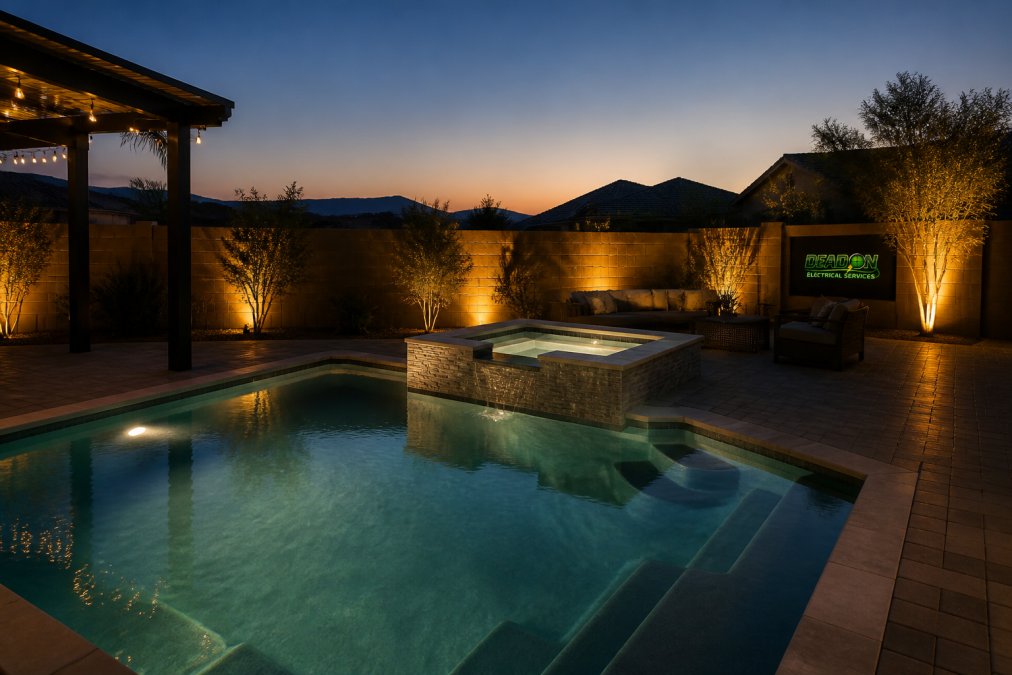
The durability factor is critical for pool environments. Salt water, chlorine, humidity, and temperature swings take a toll on electrical equipment. LED fixtures rated for wet locations hold up far better than older technologies. Installation around pools and spas must meet strict electrical code requirements, Pool and spa electrical installations have specific GFCI, bonding, wiring, and equipment requirements depending on the circuit and equipment involved. This is not a DIY project. A licensed electrician ensures your pool lighting is safe, code-compliant, and built to last.
LED Lighting Installation Cost and ROI
The upfront cost of LED bulbs is typically higher than incandescent bulbs. If you’re upgrading dozens of fixtures, the initial investment is real. However, the return on investment calculation is straightforward enough that you can estimate your payback period yourself.
How to Calculate Your LED Payback Period
Start with three numbers: your current monthly lighting electricity cost, the energy savings percentage from switching to LED (typically 75-80%), and the total upfront investment for your LED upgrade.
Here’s the basic formula:
Monthly Savings = Current Monthly Lighting Cost × Energy Savings Percentage
Payback Period (in months) = Total Upgrade Cost ÷ Monthly Savings
Example: If your home’s lighting currently costs a certain amount per month and you’re upgrading a number of fixtures, your monthly savings can be significant. The actual payback period depends on how many lights are being upgraded, how often they are used, local electric rates, and the cost of the bulbs or fixtures.
After the payback period ends, you’re operating at a significant cost advantage for the remainder of the bulbs’ lifespan, typically 5-10 years or longer depending on usage patterns.
Why ROI Improves Over Time
The calculation above captures direct energy savings, but the real ROI is stronger because it doesn’t account for avoided replacement costs. You won’t be buying new bulbs every few months. You won’t be calling a licensed electrician to replace bulbs in cathedral ceilings, recessed fixtures, or hard-to-reach outdoor lights. You won’t be dealing with the inconvenience of burned-out lights in key areas of your home.
For homeowners with recessed lighting systems, pool lighting, or outdoor fixtures that are difficult to access, the labor savings alone can be substantial. A single service call to replace bulbs in hard-to-reach fixtures can be a significant expense.
ROI in Major Renovation Projects
If you’re planning an electrical panel upgrade, a kitchen remodel, or a whole-home renovation, the ROI calculation shifts. The incremental cost to install LED fixtures during a larger project is minimal compared to retrofitting later. You’re already paying for electrician time and project coordination; adding LED fixtures to the scope is cost-effective. This is a good time to discuss your full lighting strategy with your electrician rather than treating LED upgrades as a separate project down the road.
Durability and Replacement Frequency
An incandescent bulb lasts roughly 1,000 hours of use. A CFL lasts around 8,000 hours. A quality LED bulb lasts 25,000 to 50,000 hours, with some rated for 100,000 hours under normal residential use. In practical terms, that means replacing an LED bulb once every 5-10 years instead of every few months. Over a 10-year period, you’ll buy far fewer replacement bulbs, and the cost difference compounds significantly in your favor.
Better Light Quality and Design Flexibility
Modern LED bulbs come in a range of color temperatures, measured in Kelvin (K). This flexibility lets you choose the right light for each room based on both aesthetics and function.
Color Temperature and How It Affects Your Home
Warm white (2700K) mimics the soft glow of traditional incandescent lighting, ideal for living rooms, bedrooms, and dining areas where you want a relaxed, inviting atmosphere. Cool white (4000K-5000K) provides brighter, more energetic light suitable for task areas like kitchens, bathrooms, and home offices where clarity and focus matter.
The choice isn’t purely aesthetic. Color temperature influences how your body responds to light.
Dimming Without the Flicker
LED bulbs and fixtures need to be compatible with the dimmer controlling them. Older dimmers designed for incandescent lighting can cause LEDs to flicker, buzz, or have a limited dimming range. Upgrading to an LED-compatible dimmer can improve performance and give you smoother control.
Recessed Lighting Performance
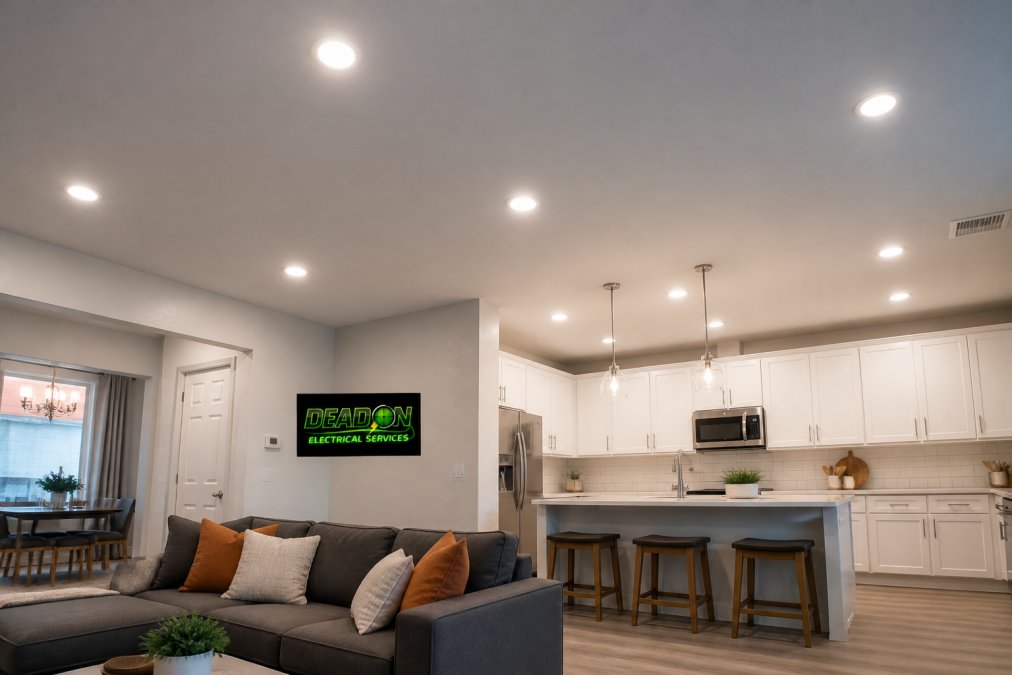
LED recessed lighting is a popular upgrade because it can improve brightness while using less energy than older incandescent or halogen lamps. Depending on the existing housing, the upgrade may involve LED retrofit trims or replacement fixtures designed for the opening.
Smart Lighting Integration and Control
Many LED systems can also be paired with smart switches, timers, occupancy sensors, or app-based controls. Compatibility between the LED fixture, switch, and control method matters, especially when dimming is involved.
Environmental Impact and Sustainability
LED lighting significantly reduces your home’s carbon footprint. Lower energy consumption means less demand on power generation, which translates to fewer emissions from the electrical grid. Over the lifespan of an LED bulb, the environmental benefit is substantial compared to incandescent or CFL alternatives.
Frequently Asked Questions
What are the main advantages of upgrading to LED lighting?
LED lighting upgrades deliver four key benefits: dramatically lower energy consumption compared to incandescent and CFL bulbs, significantly longer lifespan (often 25,000+ hours), better light quality with options for different color temperatures, and reduced heat emission. In hot climates, the reduced heat also means less strain on air conditioning. Most homeowners see noticeable reductions in their monthly electricity costs within the first few months.
Do LED lights help reduce monthly electricity costs?
Yes. LED bulbs consume 75-80% less energy than traditional incandescent bulbs and about 25-30% less than CFL bulbs while producing the same or better illumination. Since lighting accounts for roughly 10-15% of typical household energy consumption, switching to LEDs across your home can meaningfully lower your monthly electric bill. The savings accumulate faster if you replace frequently used fixtures first.
How long do LED bulbs typically last compared to incandescent?
LED bulbs last 25,000 to 50,000 hours or more, compared to about 1,000 hours for incandescent bulbs. In practical terms, an LED bulb used 3 hours per day can last 20+ years. This long lifespan means fewer replacements, lower maintenance costs, and less waste. For homeowners, this translates to buying bulbs far less often and spending less time on ladder work.
Do LED upgrades require changes to existing electrical wiring?
In most cases, no. Standard LED bulbs fit into existing sockets and work with most dimmer switches and light fixtures. However, some older fixtures or dimmer switches may cause flickering or compatibility issues with certain LED bulbs. For recessed lighting retrofits or new outdoor LED installations, a licensed electrician can assess your wiring and recommend the best approach to ensure safe, flicker-free operation.